Last Updated On: October 13, 2026
One month into pregnancy, a lot is happening behind the scenes, even if your bump is still invisible. Your baby is just beginning to develop, and your body may start sending small early clues that you’re pregnant. Keep reading to learn what to expect this month and how to support yourself along the way.
At one month pregnant, sperm will have fertilized one (or more!) of your eggs, and it will have implanted into the lining of your uterus.1 You may not look pregnant yet, but a lot is happening behind the scenes.
Right away, your body will start making hormonal changes that can leave you feeling tired or nauseous.1 You may also become bloated. This isn’t your bump forming yet, but it’s one of the only visual one-month pregnancy indicators.
During the first month of pregnancy, your fertilized egg will begin to divide rapidly. During this dividing phase, the baby is called an embryo. This is the time when the neural tube (the beginnings of the brain and spinal cord) begins to form. Also forming at this stage are the placenta and amniotic sac.2
After month one of pregnancy, the embryo is just about 2 millimeters long, or about the size of a poppy seed.2
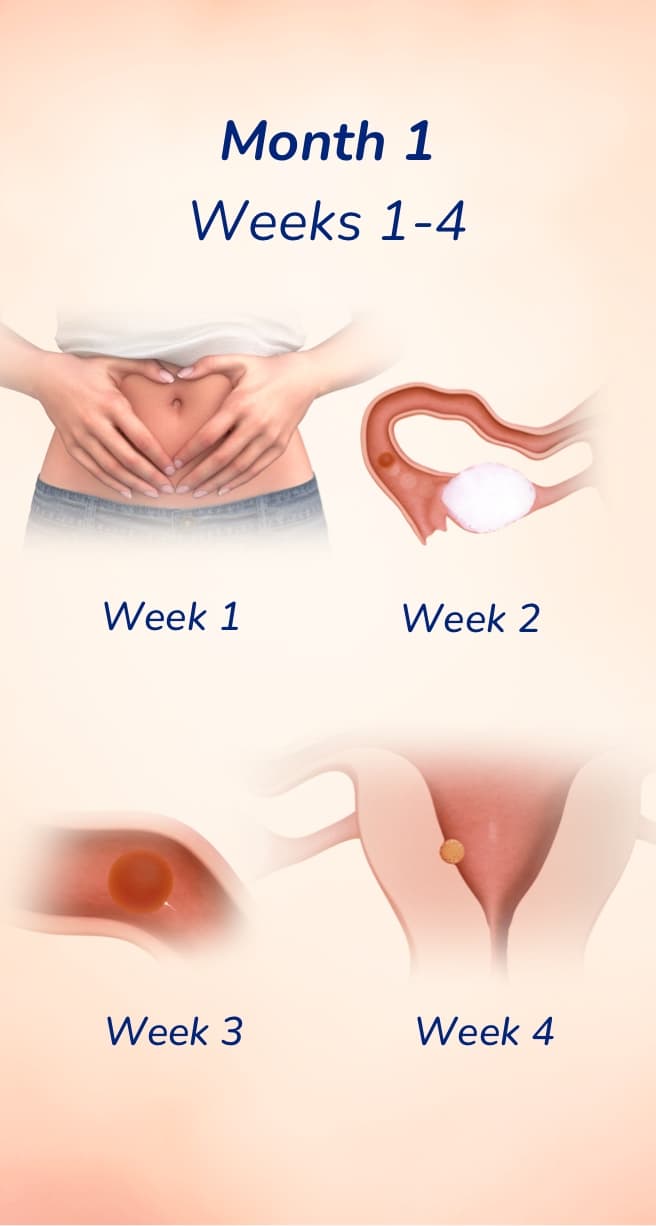
During your first month of pregnancy, you may have some symptoms of pregnancy, like nausea or tiredness, or you may barely notice any changes yet. Both are normal.
Every mother is different, but some common one-month pregnancy experiences include:1
There are plenty of ways to deal with these first-trimester issues if they get to be too much.
In addition to these experiences, a missed period may be an indication that you’re pregnant. Around this time, a home pregnancy test may show a positive result as levels of the pregnancy hormone hCG rise. If your test is negative but you still think you may be pregnant, try testing again a few days later.
What does one month pregnant look like? Honestly, you’ll probably still look and feel like yourself. You may experience some bloating, but it’s far too early to see a pregnant belly at one month. It’s also possible to feel some light cramping as your uterus starts to expand.3 Changes are mostly internal at this stage, meaning you won’t get a one-month pregnant stomach.
At one month pregnant, your belly probably won’t be showing yet, even though you’ll be experiencing plenty of amazing changes on the inside.
Other than bloating, the only physical change for most women is that their breasts may feel more tender or swollen as their body releases more hormones.1 Other pregnancy indicators, like weight gain, will start to happen later in the first trimester.
Your baby will be implanted in the uterine lining. This is where they’ll grow and develop for the remaining eight months of your pregnancy. At this stage, your baby is still a one-month embryo, meaning they’re super small and not externally visible.
As you reach month one of pregnancy, there are plenty of things to do to support both you and your baby.
After you’re done celebrating, these are your next steps:
A healthy pregnancy starts early on with these steps:
Feeling overwhelmed? Don’t worry, you’ve got this! Here’s a checklist to ease your nerves and make sure you’re on the right track throughout the first trimester:
References:
1. https://www.plannedparenthood.org/learn/pregnancy/pregnancy-month-by-month↗
2. https://www.acog.org/womens-health/faqs/ultrasound-exams↗
3. https://americanpregnancy.org/pregnancy/cramping-during-pregnancy/↗
4. https://www.cdc.gov/folic-acid/about/index.html↗
During your pregnancy, you and your baby experience exciting changes every day. Prepare for your new arrival with help from Enfamil Family Beginnings. It’s the perfect resource for new and expecting moms. Save on Enfamil products, track your pregnancy and baby’s growth, and get helpful articles relevant to your journey.
Join NowAll information on Enfamil, including but not limited to information about health, medical conditions, and nutrition, is intended for your general knowledge and is not a substitute for a healthcare professional's medical identification, advice, or management for specific medical conditions. You should seek medical care and consult your doctor or pediatrician for any specific health or nutrition issues. Never disregard professional medical advice or delay seeking medical treatment, care, or help because of information you have read on Enfamil.